


It has been over three years since I’ve had a profile on a dating app. If I’m honest, I haven’t missed it. All I remember is superficial conversations—one after the next—often consisting of one-word sentences. “Into? Pics? Now?” As a transfeminine, non-binary person on apps that focused on binary experiences of sexuality and attraction, I often felt estranged, fetishized, or well, left in the dust. It felt like everyone’s playground but mine, and I know from endless conversations with many queer and trans folks that they feel the same.
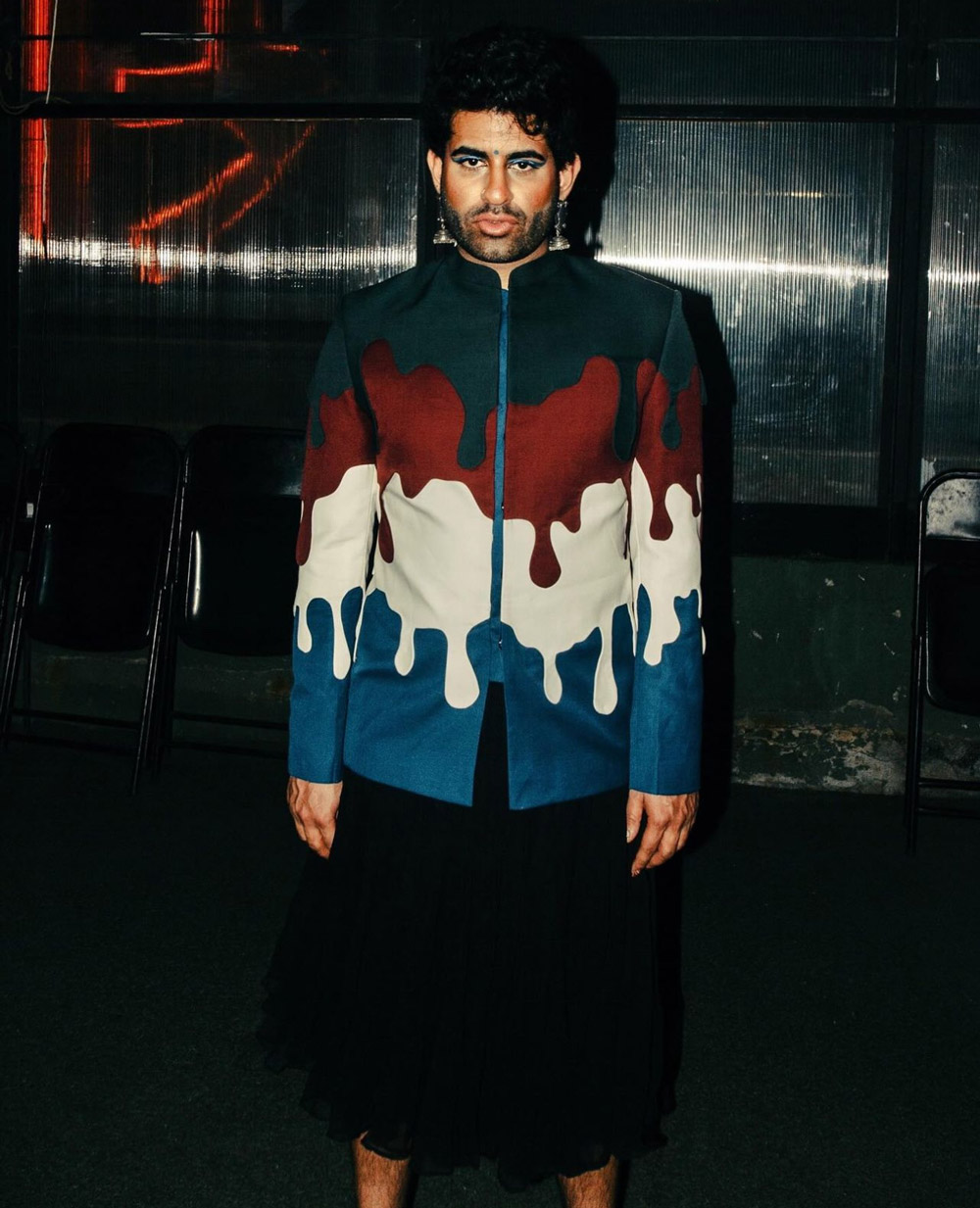
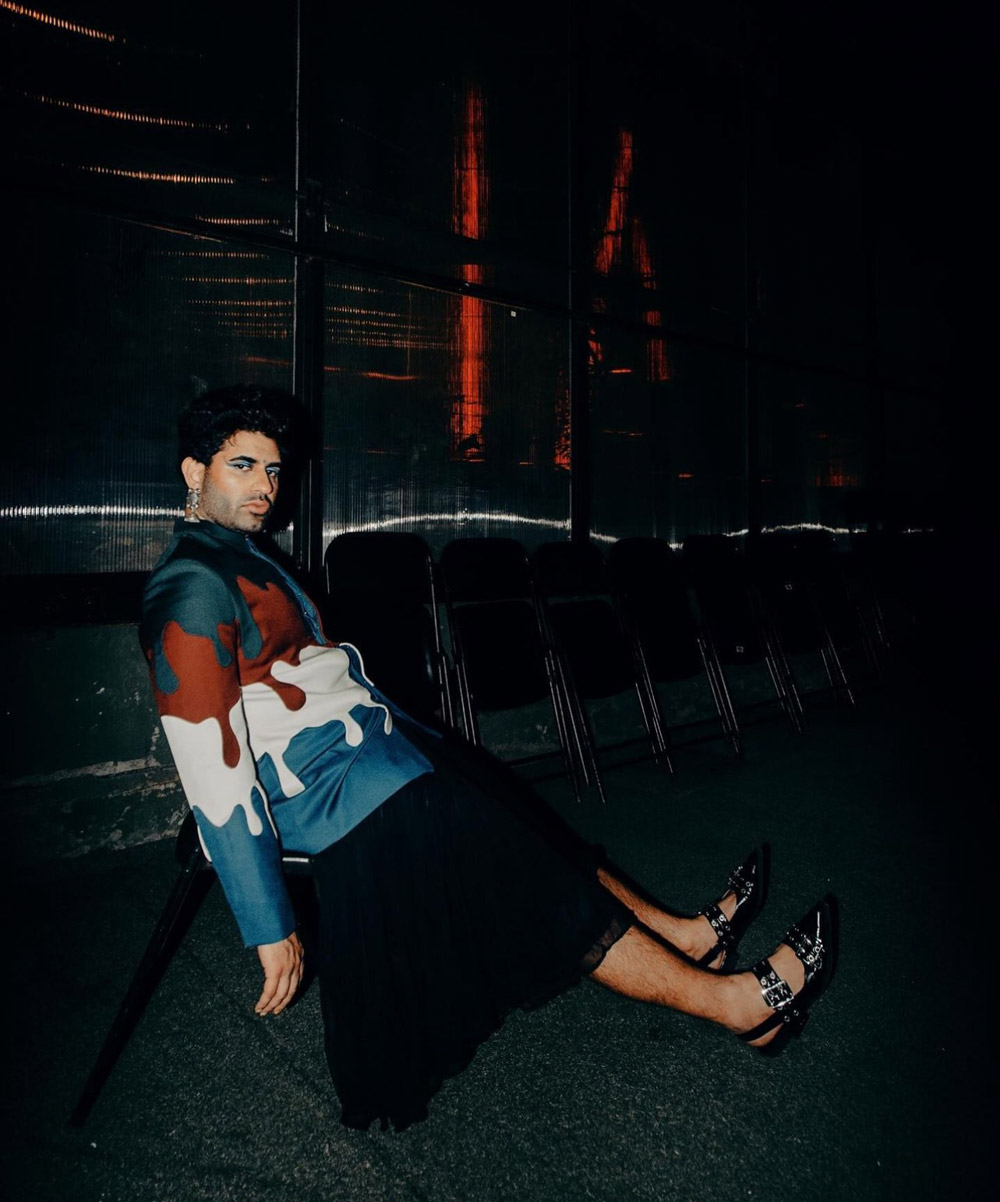
“Don’t abandon yourself”: Alok Vaid Menon on Online Dating, Desire and Embracing Fluidity
Dating apps: they’re an indispensable part of the way we connect, not only with potential romantic partners but also with friends (add the benefits if you so please), and even broader, with our local communities. Especially for LGBTQ+ and queer people, dating apps are often a first dip into the waters of a world larger than the neighborhood they grow up in. You can log on, choose to remain as anonymous as you want, pick the pictures that showcase who you are, and tell people what you want them to know about you.

That’s why my interest immediately peaked when I saw that Alok Vaid-Menon (they/them), gender non-conforming writer, comedian, and performance artist, announced their partnership with Feeld. Alok embraces fluidity in all aspects of their lives and shows people around the globe how expansive our existence can be if we are willing to let go of defined ideas on sexuality and gender. “Feeld is creating a space for exploration of the self,” says Alok. I talked to them about online dating, exploration, and staying true to yourself while finding a connection to others
Joppe: For lots of queer people, dating apps are vital in finding a connection to peers, locally and globally. What is your relationship with dating apps?
ALOK: I treat them as more than just a dating app; I especially love using them when I travel. They are a tour guide, a queer map, an underground network of places to be and people to see. They’re helpful to find and build community.
Joppe: I love that; ‘an underground network’ sounds so chic and elusive. What I’ve noticed in dating apps—well, social media, in general—is that it’s almost too easy (and expected) to curate your online self and portray yourself as more desirable/successful/popular. How do you make sure that you show up as your truest self, even on dating apps?
ALOK: I first want to validate how incredibly difficult this is. We exist in a culture with so many fixations on who we should be and what we should look like, so it’s easy to get lost in the noise. I believe that we have to go internal before we go external. The more I accept myself and feel secure in who I am, the less interested I am in shapeshifting for other people. Self-acceptance helps us accept that we are not for everybody: rest assured in the fundamental truth that we are going to magnetize the people we are meant for

Joppe: Thank you for that. With how difficult dating can be, what are some of the challenges you encountered while (online) dating before you found Feeld? How does Feeld feel different?
ALOK: What I love about Feeld is that it really champions fluidity. Genderqueer and trans people are often reported for impersonation/banned on other dating apps, but Feeld allows you to select your identity markers from a list of more than 20 options. Knowing those options are there and that you can show up as your authentic self while connecting online is incredibly important. It’s also a place where people are transparent and communicative about what they’re looking for. There’s not a preset formula or equation; it’s individual and particular. That means there’s a bigger horizon of possibility.
Joppe: I have to say, after using the Feeld app for a week now—it’s for research, mom—I relate to what ALOK is saying. Being able to select specifically which identity markers feel true to me has granted me some security in scrolling through the profile. The cards are on the table. I don’t feel like I have to masc it up to be found desirable, which I did when I used other dating apps in the past. Another win: the profiles I see are a lot more varied than I’m used to, and people are more honest and nuanced about what they’re looking for. I feel possibility instead of restriction, fluidity instead of rigor
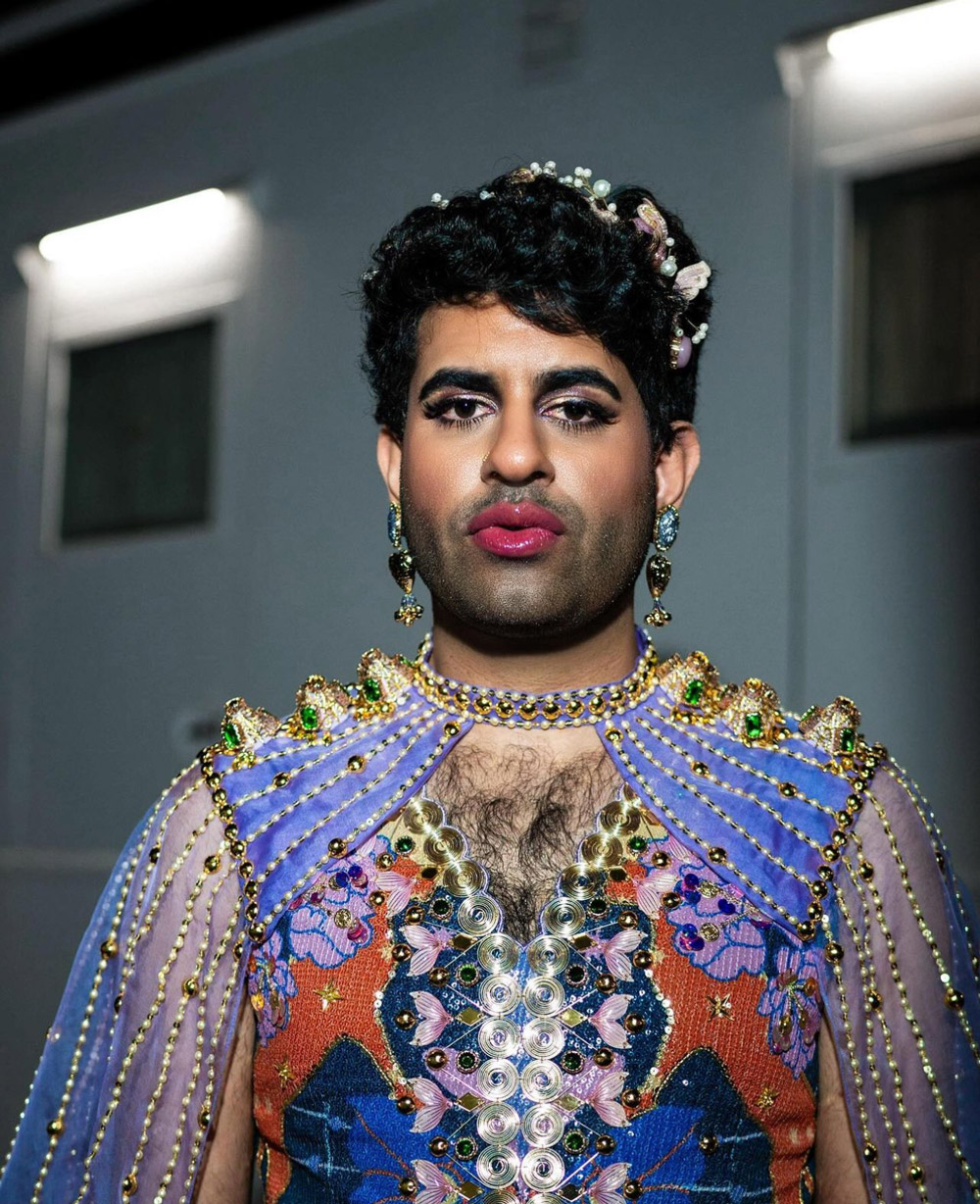
Joppe: Identity, gender, and sexuality: we have established that all of it can be fluid. How have you experienced this fluidity in your own life and body?
ALOK: Growing up, I was taught that sexuality, gender, and identity only existed in binaries, dichotomies in which man and woman, straightness and gayness were the only options. I thought I had to find a way to confine myself to those identities and spaces and shrink myself down in order to fit in. It was only when I met a community—other trans people and their imaginative, different ways of living—that I realized I was allowed to be complex and nuanced. That there is no such thing as too much or too complicated. I welcome complexity and look for that in others, too.
I have spent most of my life rewiring my brain in how I approach the relationship with myself because I believe that’s truly where a healthy connection starts. That’s one thing I love about Feeld: the app allows you to really get into who you are and what you desire for yourself. The relationship you have with yourself is arguably the longest relationship you’ll have in your life, and yet it is the one we neglect the most. We mistreat and deny ourselves; we are taught to be dishonest with ourselves.
That is where true honesty and authenticity lie for me: being able to show up as your complex, nuanced, messy self and having others do the same with you. Not saying, “Oh, this is too much,” but instead going for, “Let’s dive in together”.
Joppe: What I find tricky sometimes is not coming to terms with my own fluidity but communicating it to others. When things are nuanced and flexible—not fixed—it’s sometimes difficult to accurately convey that to others. How do you go about this?
ALOK: What’s so interesting about language is that all of it is made up, and we can change it to fit our needs. When people get angry about language changing, they’re actually scared of the unknown, of what could lie beyond the language and realities that we know today. And that’s actually what a lot of trans and (gender)queer people do: they show possibility, different realities that break loose from conventional norms about gender and sexuality.
True connection means not having to overexplain myself to others.
Could I get that on a Post-it? I’ll stick it on my bathroom mirror. If you could give a younger version of yourself one piece of dating advice, what would it be?
ALOK: (thinks) If I had to give myself one piece of advice, maybe “Don’t abandon yourself”. There are going to be so many temptations to “fit in” in order to be loved. But you are worthy of love as you are.
Thank you so much for your time and energy today, ALOK, it was a pleasure to meet you. Hope to find you somewhere on the underground network!
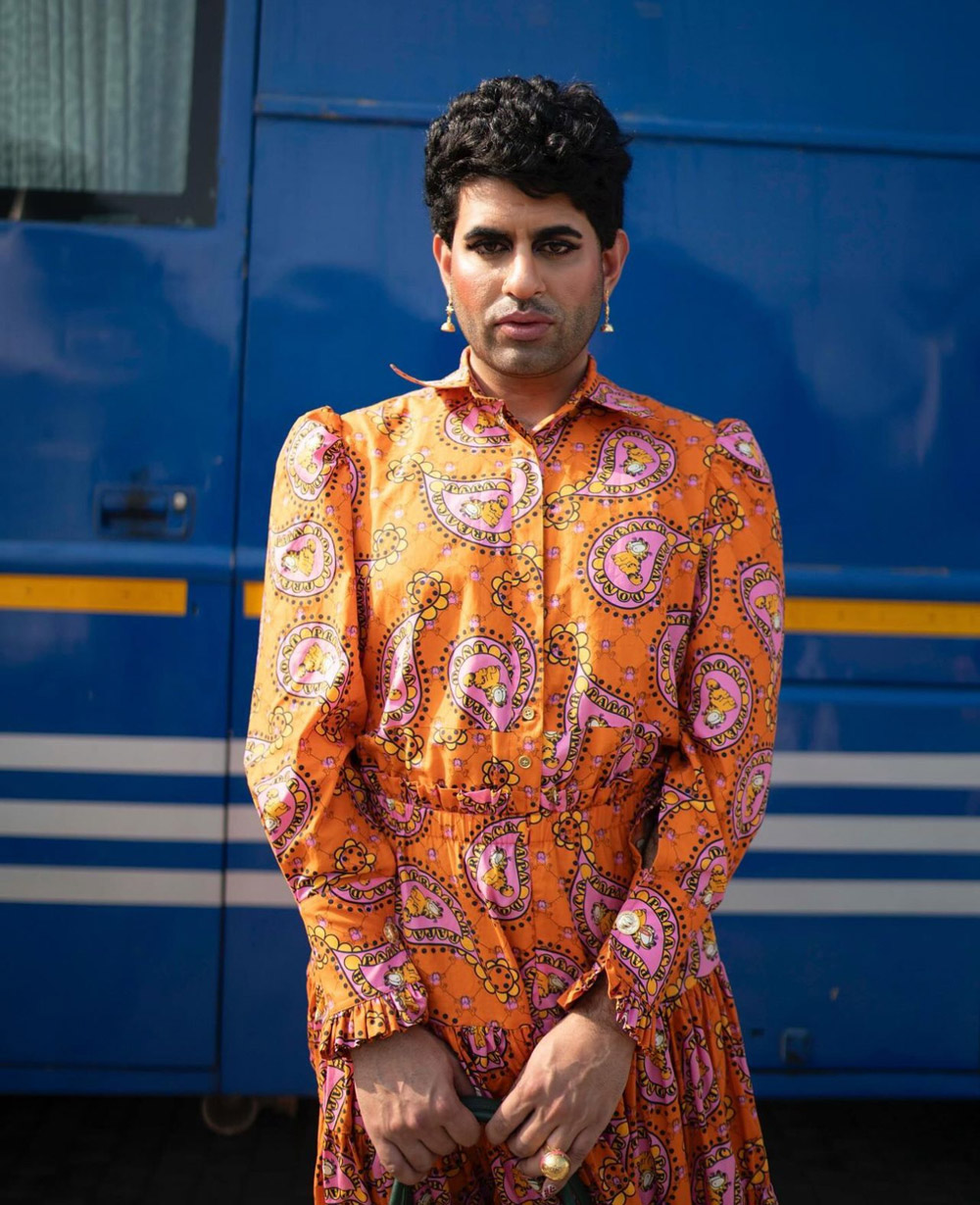
Photo credits: Roshini Kumar and Saunak Shah


Related articles
 PHOTOS: We hosted a table at the Antwerp Symphony Orchestra Gala
Last Friday, Enfnts Terribles had the pleasure of hosting a table at the Antwerp Symphony Orchestra’s gala opening of the…
PHOTOS: We hosted a table at the Antwerp Symphony Orchestra Gala
Last Friday, Enfnts Terribles had the pleasure of hosting a table at the Antwerp Symphony Orchestra’s gala opening of the…
 IKEA x Gustaf Westman: Your Holiday Table Just Got an Upgrade
Back in August, we were invited to a cozy press lunch in Amsterdam, where IKEA teased its brand-new collab with…
IKEA x Gustaf Westman: Your Holiday Table Just Got an Upgrade
Back in August, we were invited to a cozy press lunch in Amsterdam, where IKEA teased its brand-new collab with…
 Chaos & Community: Inside TRAUM’s Pride Weekend
Antwerp’s Pride Weekend is about to explode, and to get you excited for four days of pure celebration, we caught…
Chaos & Community: Inside TRAUM’s Pride Weekend
Antwerp’s Pride Weekend is about to explode, and to get you excited for four days of pure celebration, we caught…
 Azzedine Alaïa, Thierry Mugler: The Paris exhibition you can’t miss
Tucked away in the Marais, the Fondation Azzedine Alaïa is currently hosting a fashion exhibition that feels more like a…
Azzedine Alaïa, Thierry Mugler: The Paris exhibition you can’t miss
Tucked away in the Marais, the Fondation Azzedine Alaïa is currently hosting a fashion exhibition that feels more like a…
