Maxim Meyer-Horn

11 Apr 2023
Music

Miya Folick: “When I’m Writing Songs, It Feels Extremely Personal.”

You don’t make an album overnight. Miya Folick knows that better than anyone. Five years after her celebrated debut album ‘Premonitions’, she will release her long-awaited second album ‘Roach’ at the end of May. With it, she is currently on an extensive tour of Europe and soon also of America. We took the opportunity to meet her on a sunny day in Berlin and delve deeper into the emotion- driven process behind her new work. Among other things, we talked about the writing process, how it feels to make music in 2023 and being in control on a visual level.

How are you? How was the tour with Dermot Kennedy through Europe so far?

Dermot Kennedy’s crew is the most helpful crew that I ever toured with as support, and they’ve made our lives honestly too easy. I feel like it’s the difficulties of a tour that make you aware you’re on tour so without those difficulties, are you even on tour? I’m kidding, but it’s honestly been really good.

You’re releasing an album soon and released a handful of tracks so far, with your song “Mommy” being one of the most personal songs you put out yet. How is it for you to release this song and immediately play it to so many people live?

Interesting, because I was already on tour when I released the song. While I’m trying to build more audience in Europe and there are definitely some listeners in Germany, a majority of the audience is still in the US. So I felt far away from the release in a way. I felt a bit detached because I wasn’t there physically. Releases are always strange and I think I always feel a bit detached when the song is released. Even when a song is very personal. Maybe I try not to think about it too much.

And maybe that’s a coping mechanism because if I thought about every single person that was listening to the song and how exposing that is, then I would probably want to
hide under the covers. But it’s been really interesting to play the song live on this tour. We haven’t played it every night but we’ve played it some nights and it is quite emotional for me even though I think lyrically, there are definitely other songs that are more overtly emotional or more overtly sad. For some reason, this song, because it’s about my parents, feels very personal.

When you put music out nowadays, it may feel like a more distant experience because it just appears on a streaming platform, and don’t necessarily see the person behind a stream. Does that make you feel detached from your music?

For me, when I release the music, it almost feels like it is no longer mine and it’s like you open the cage and a little bird flies away and then it’s free. Artists all feel very differently about that, but I’m not that precious about my music once it’s released. When I’m
writing songs, it feels extremely personal. I am thinking about every element that goes into it. I’m very protective of who gets to touch it and how they get to touch it. It feels like the process of making music with other people requires a lot of trust and a lot of intimacy and then once the song’s done, my feeling about it almost completely changes and I think “OK bye!” The relief. The story is told and I’m already more interested in my next song. So, I’m much more attached, at this point, to the demo that I have on my phone that I wrote three weeks ago, than the song that I’m putting out right now.

What does help to bring me back to the music, are personal messages from people. That always feels super meaningful to me and I do read my DM’s. That’s important to me – having that personal connection with people even if it’s just reading a couple of sentences of somebody’s experience of listening to the song and then me just saying: “Thank you so much!” It’s a simple conversation that’s very meaningful to me and really important. I kind of can’t imagine releasing music without that element being possible because if it’s just looking at numbers on the back end of your Spotify account, that doesn’t feel emotionally fulfilling to me. If I see thousands of numbers on Spotify and then I get one message in my inbox of a personal story from somebody, that feels so much more gratifying and really can make my day. I just like to connect with people and that’s a really important part of releasing music. Everything can be so focused on streaming now, and that feels alienating.

Let’s talk about the visual aspect of the album because that’s also an important part of being an artist. How did you approach the visuals of the album?

There’s a mood board that I made years ago when I first started working on this record. I made it to send to musical collaborators. There were images from the Three Colours Trilogy and quotes from ‘The Passion According to G.H.’ There was one image of Bjork and some paintings by this LA artist Zoé Blue M. for color inspo. A lot of it was mood and color references, or gestural, sensory, textural suggestions. One photo was like a cloth floating in the wind. That kind of content lived with me through the making of the record.

When I started to think about visuals, I referenced it again but my taste had changed, because I’d worked on the record for several years. The ways that I wanted to present myself shifted. For the EP, I worked with some friends who have a production company called Sportscar Parts. They worked on the visuals for the whole EP. And then for the album, I decided to creative direct myself. There’s always a balance of figuring out how you want to portray the music but also portraying yourself as the artist. Then, all of that needs to be balanced with a budget and the budget is often quite small, which is honestly like an interesting creative challenge. Sometimes, I get kind of jealous of other kinds of artists, who don’t have to portray themselves aesthetically. It’s just about the work. Like film directors, when they’re putting out their film, they don’t have to think of how they’re going to dress on the film poster. They are not on the poster!

Why did you decide to take the responsibility to be the creative director of the visuals as well?

There are just so many choices you make about how you’re going to be presented as an artist so I think I find it pretty fun, which is why I decided to creative direct everything for the album myself. The one thing from that initial mood board that persisted to the end of the process was this sense of kinetic energy and momentum. And grit mixed with sexiness. That was what I energetically wanted to portray and then I went about doing that by creating a new mood board with more specific references with very specific color, light, style and makeup references. I’ve put together a team and we shot everything. We actually made an interesting decision to not make any music videos for this album because music videos are extremely expensive. To be transparent, I really wanted to hire the right people for the photos and be able to pay them a fair rate.

In order to do that, I basically had to use almost all of my budget, and to make a video on top of that, I would have had to ask people to work for free or to do me big favors. I’ve done that in the past and I just didn’t want to do it right now. Having beautiful, evocative images felt right. If we find that people are connecting very well to one song or another, then maybe we’ll make a music video. We made different photos for each single and captured that on video as well. We’ve been using BTS footage to make these little visualizers that are very simple, moving images. They’re like very repetitive visual poems. It’s so funny because I saw someone on YouTube comment: “This is the worst music video I’ve ever seen in my life,” but it’s not a music video!

Would you say that these comments affect you in some kind of way?

I don’t get offended by comments like that because I think that these visualizers that we’re using, require a certain amount of the viewer’s brain and emotions to apply meaning to it because it’s the same image repeated again and again. If you’re watching it with an open heart, I feel like what will happen is that the image and the music, as the song goes on, they’ll inform each other. The image will start meaning different things as it’s applied over a different lyric, so if you’re willing to see that, you’ll understand it. I don’t have control over how people watch or listen.

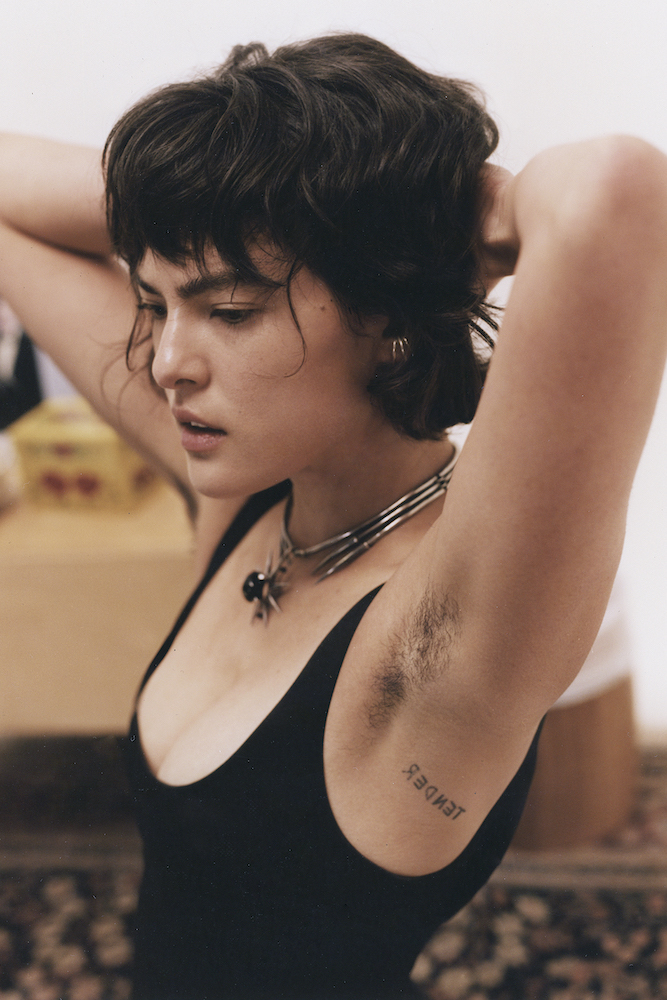
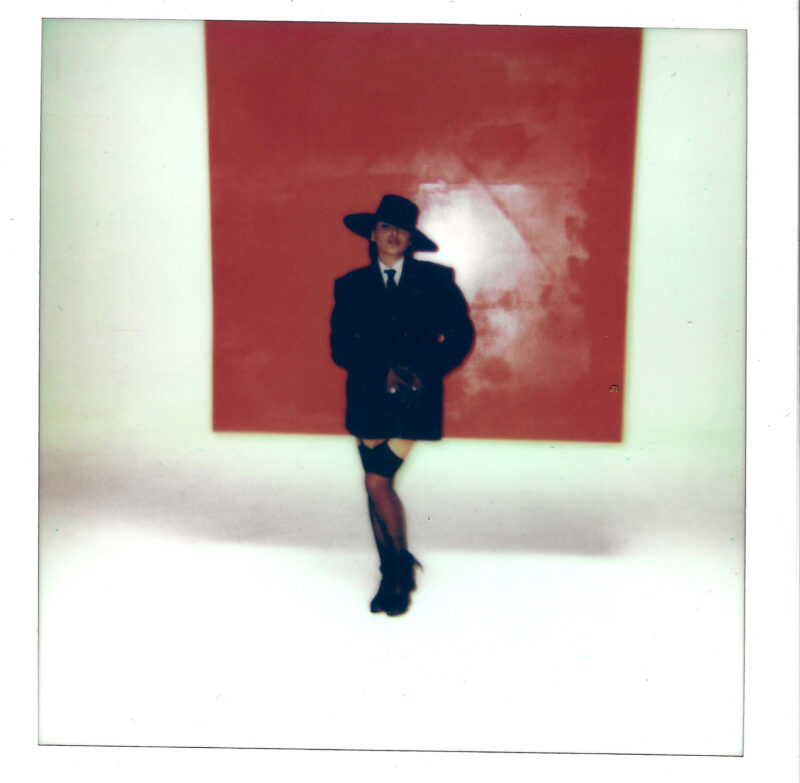
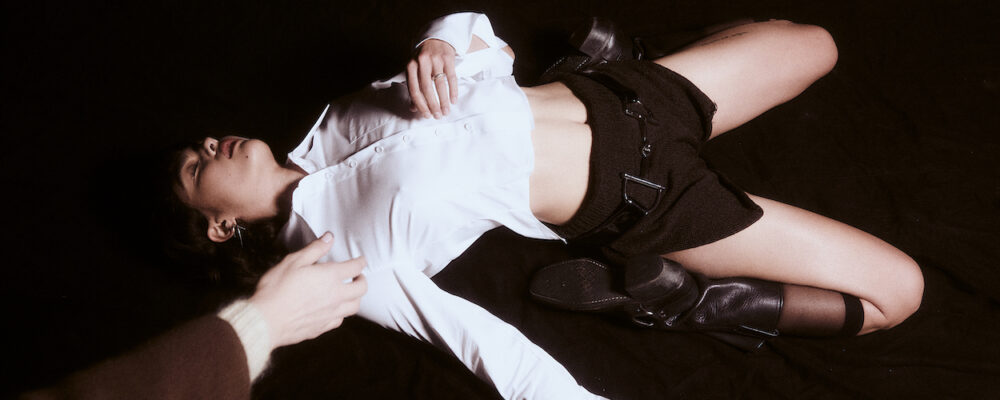
A lot of the photographs are very classic portraits, quite normal, but there’s something slightly off. Surreality without going fully surreal. The photographer Jonny Marlow and I spent a lot of time talking about color and how to print each image. We didn’t just apply the same system to every image. As the album goes on, some of the images are digital, and some of them are film. Everything has this kind of handmade feel to it. There’s a lot of hand-drawn text by Chase Shewbridge and then, there’s also the texture of printing, reprinting, and scanning. There’s also just straight digital information as well, which is what I like and think reflects the music because the music is live and organic but also produced and in the box. I like that mixture of textures.

‘Roach’ will be out on May 26th.

Pictures by Jonny Marlow

Interview: An Introspective Dive Into Ego, Art, and Raw Sound With Pop Icon Agnes After nearly two decades in music, Swedish artist Agnes is entering her rawest, most personal era yet. Her new album…
PREMIERE: GET INTO BIBI SECK’S BOX! Bibi Seck, Belgium’s celebrated DJ queen, known for her vibrant mix of house, disco, techno and all things funky, now…
10 Things Chibi Ichigo Says “BUH” Too Chibi Ichigo is nothing less than a lyrical genius. The Brussels-based artist has been grabbing our attention repeatedly over the…
INTERVIEW: PinkPantheress about Fashion and Self-Expression PinkPantheress has never been one to play by the rules, whether in music or in fashion. Just as her sound…
X

Subscribe here for free pizza*

(*Pizza might actually be our newsletter)

This site uses cookies. By continuing to browse the site, you are agreeing to our use of cookies.